
The UK brands putting monk fruit in their products

We spend a lot of time talking about our own monk fruit powder, so here is a post that is mostly about other people's. A growing list of UK brands, none of them household names yet, all of them putting monk fruit into something interesting. We will keep adding to it.
There is a shared thread worth pointing out before the list. Every brand below uses monk fruit made from the whole fruit rather than a purified extract, and nearly every label declares it the way the law here allows: a water infusion, known technically as a decoction. That distinction is doing more work than it looks.
The short version
- UK challenger brands using monk fruit, across sodas, electrolytes, granola, protein bars, chocolate snack bars and a children's drink.
- Nearly all of them declare a monk fruit infusion or decoction, the form permitted for sale in the UK and EU. One lists a juice of the whole fruit instead.
- Highly purified mogroside extracts sit in a different regulatory box and are not authorised here, which is why you will not see them on a British ingredients list.
- Formulations vary a lot. Some pair monk fruit with stevia or erythritol, some use it alone, and the percentages are rarely the same twice.
Why they are all using infusions, not extracts
Most of the monk fruit sweetener sold globally is a highly purified extract, where the sweet compounds called mogrosides are isolated out of the fruit. That version is not authorised for sale in the UK or the EU. It is treated as a novel food, and no application has cleared.
What is allowed is the older, gentler route: steeping the whole fruit in water and drying what comes out. The Food Standards Agency confirmed that non-selective aqueous decoctions of monk fruit are not novel foods, and the EU reached the same conclusion in its novel food catalogue. If you want the full picture, we wrote it up in is monk fruit legal in the UK and EU.
So when you see "monk fruit infusion" or "monk fruit decoction" on a British label, that is not a marketing flourish. It is the reason the product can legally exist.
Cellular Soda
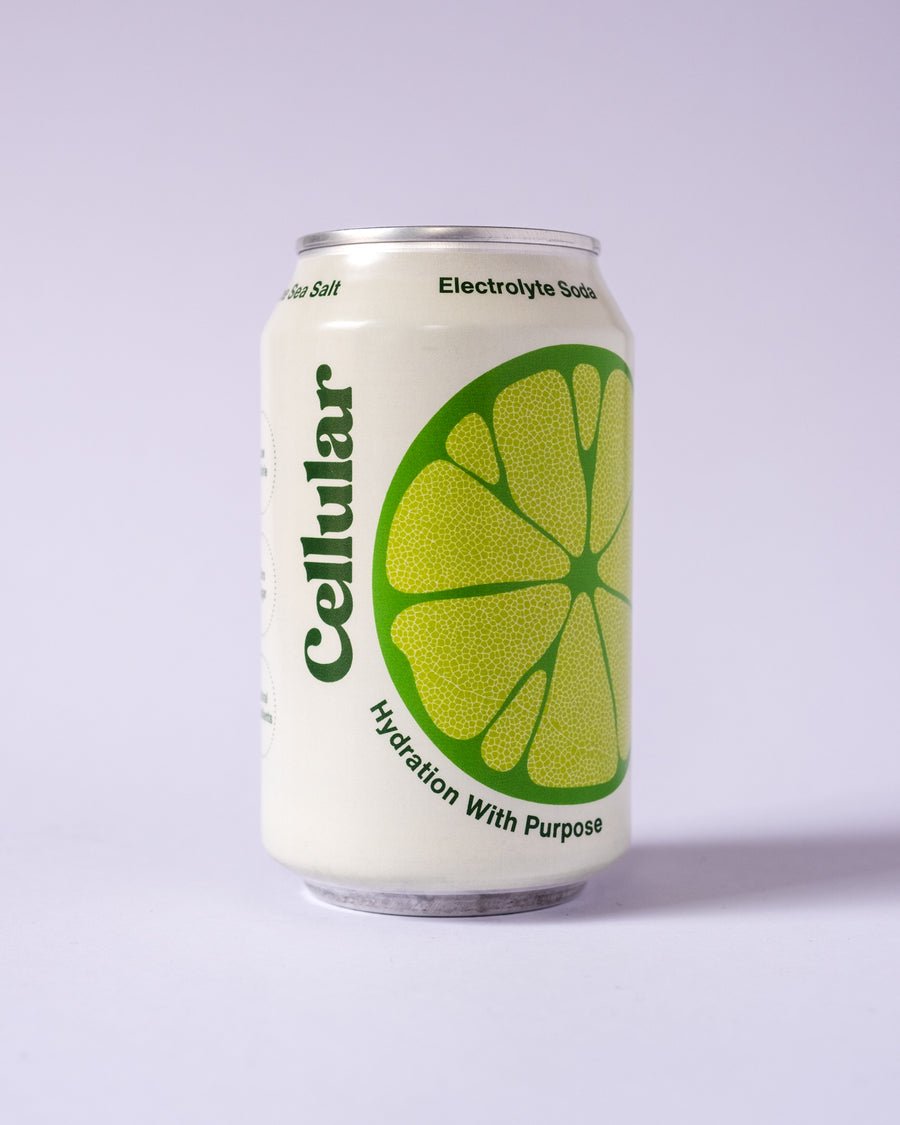
Their Lime and Sea Salt Electrolyte Soda is a sparkling drink in a can, under the line "hydration with purpose". It is the closest thing on this list to a proper soft drink: carbonated, sharp, and designed to be drunk cold rather than mixed up in a bottle.
Concentrated monk fruit infusion sits in the ingredients alongside steviol glycosides from stevia, so the sweetness is shared between the two rather than resting on monk fruit alone. Magnesium, potassium and B12 do the electrolyte work.
Hunter & Gather
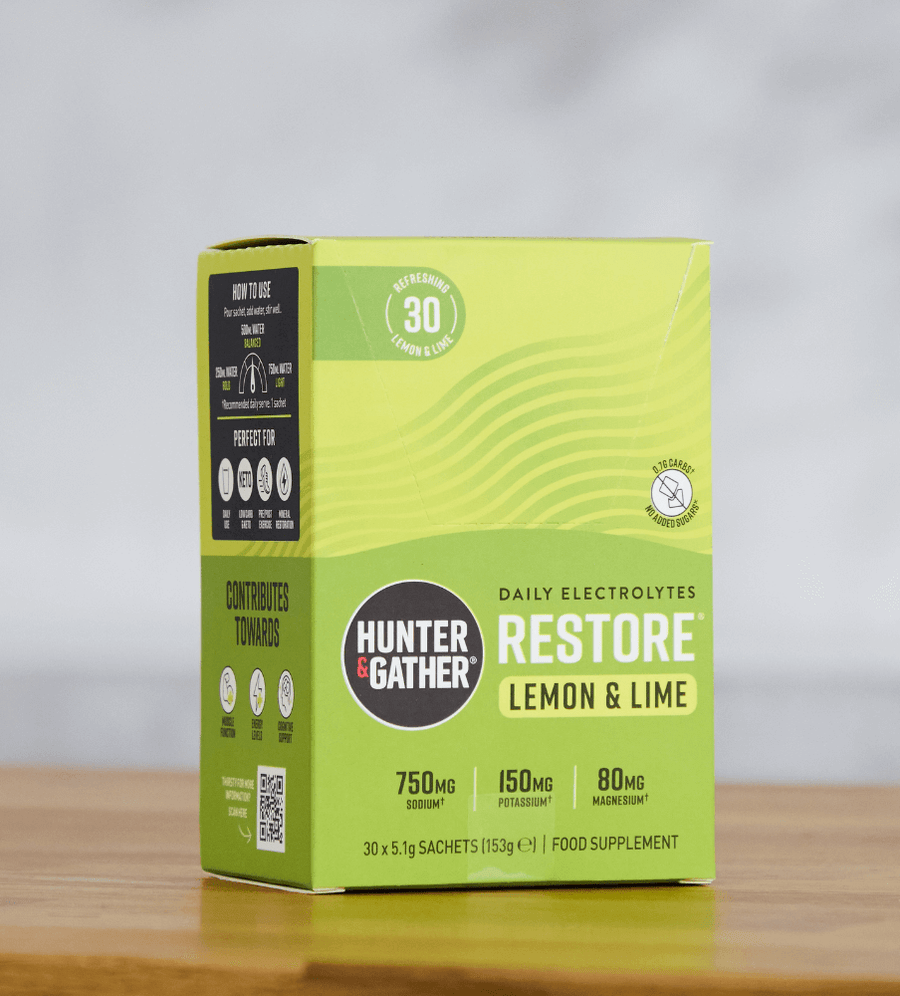
Their Lemon and Lime Restore Electrolytes come as sachets you mix into water. Hunter & Gather are one of the better known names here, and the ingredients list is unusually short: pink Himalayan salt, monk fruit decoction, natural flavouring, citric acid, magnesium and potassium. That is the whole thing.
They are also the most explicit of the lot about why monk fruit is in there. In their words, they "chose monk fruit to bring natural sweetness" to the range, "adding just the right amount of fresh and fruity flavour without refined sugar or artificial sweeteners". Note the ingredient is declared as a decoction, the technical term, rather than the friendlier "infusion".
fu:di
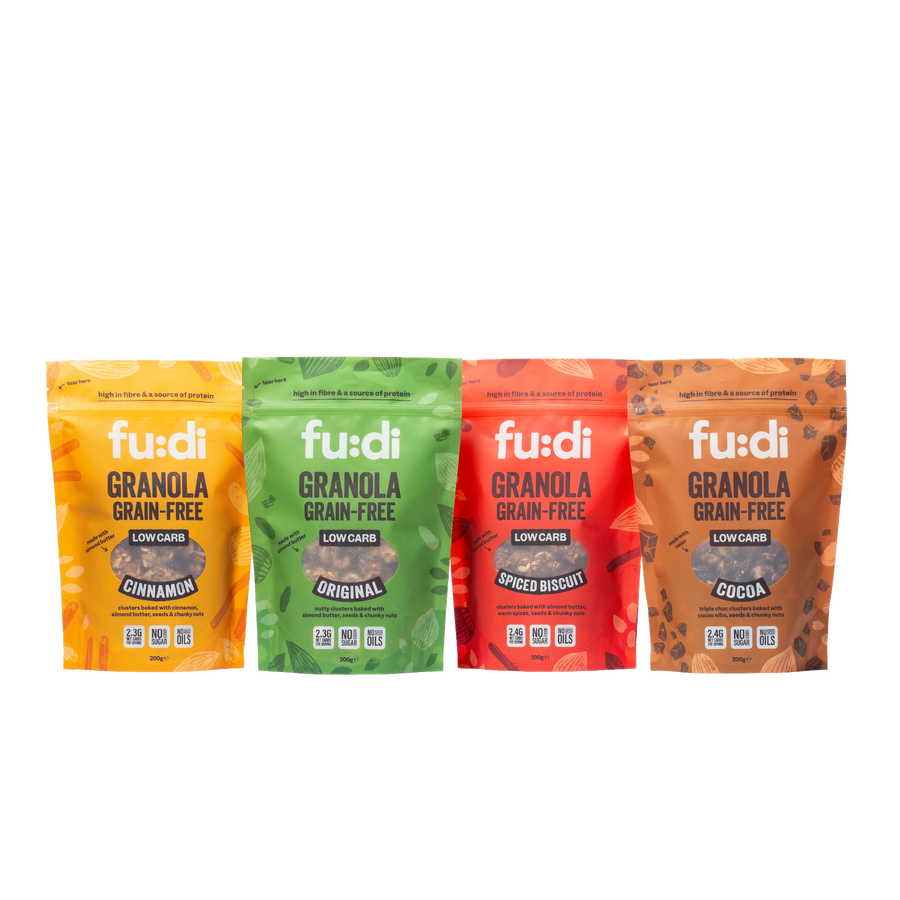
Their grain-free granola bundle is four flavours in one box: original, cinnamon, cocoa and spiced biscuit. Nuts and seeds in place of oats, baked into clusters with almond butter, under the line "crafted by chefs, backed by science".
fu:di are the broadest user of monk fruit here. It is not one hero product: it runs across their breakfast cereals, in the granola and the toasted muesli; their condiments and sauces, where the brown sauce lists concentrated monk fruit infusion alongside the tomato and tamarind; and their sugar substitutes, the Low Carb Larder range, which includes monk fruit drops sold as a sweetener in their own right.
Worth knowing how they use it. Monk fruit is the last name in a blend that leads with erythritol and stevia, so it is doing the finishing work rather than carrying the sweetness alone. That is a different job from the one it does for us, and a sensible one in savoury products, where you want a little sweetness to balance vinegar without it announcing itself.
ELEAT
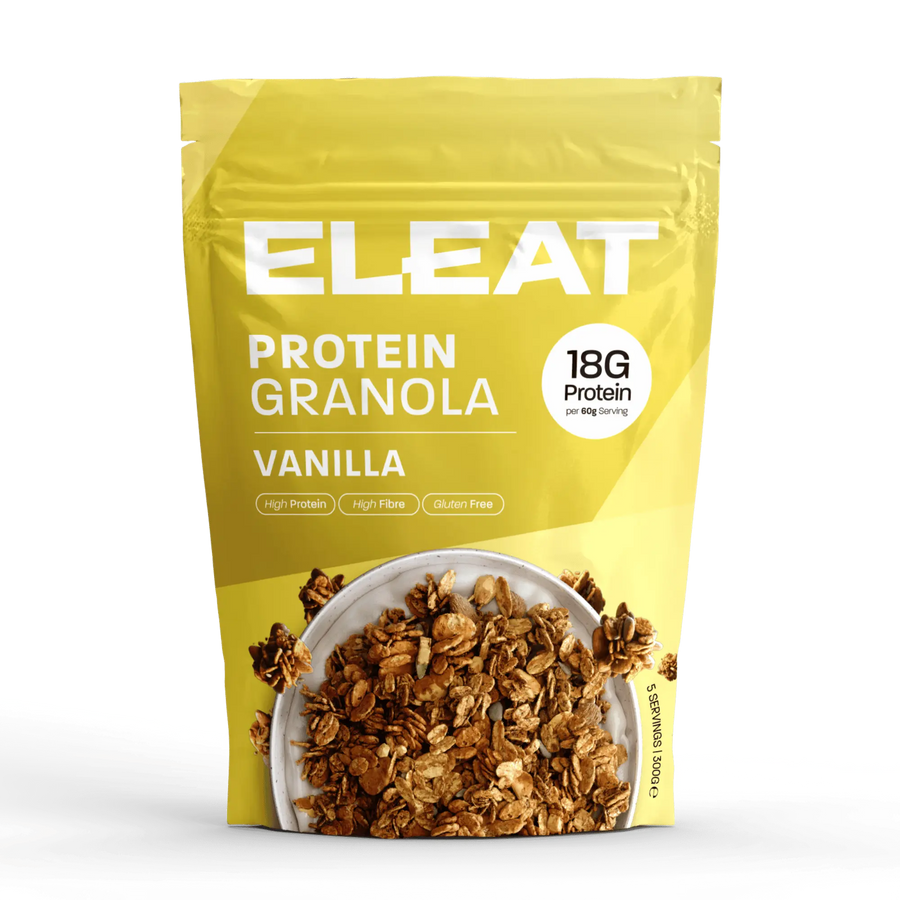
Their Vanilla Protein Granola runs at 18g of protein per 60g serving. Gluten free oats and pea protein crispies do the heavy lifting, with dates and almonds through it. The brand pitch is a fast breakfast for people who do not want to think about breakfast, which is roughly the slot we fill with a spoon of Zilch in the porridge.
What we like here is the labelling. The ingredients declare "monk fruit infusion (2%)", with the percentage stated outright. Very few brands quantify their sweetener, and doing so tells you immediately how much of the sweetness is coming from the fruit rather than from the dates.
Good Ranger
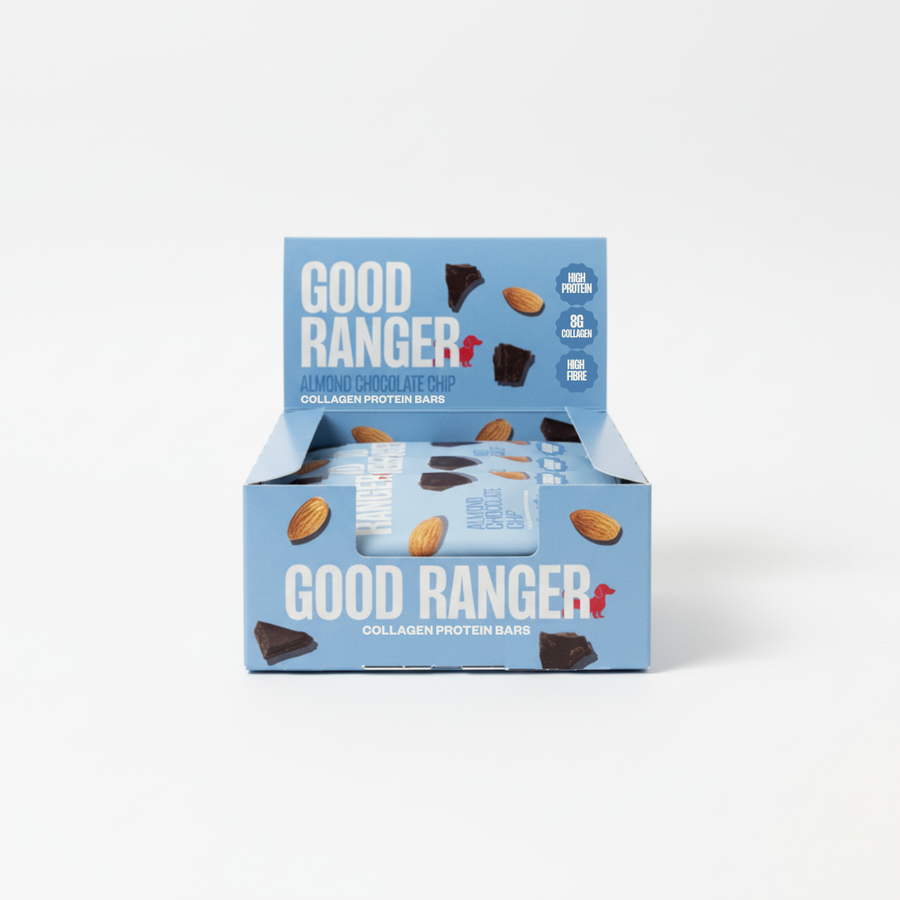
Their Almond Chocolate Chip bar is a high-protein collagen bar, running on a blend of bovine collagen and pea protein with chicory root fibre and cashew butter. The brand line is "clean ingredients, high protein, high fibre, no nasties".
Monk fruit appears at the very end of the ingredients list, which tells you it is there in a small amount, doing a finishing job. Maple syrup carries most of the sweetness, with monk fruit topping it up so there is less syrup needed overall. That is a fairly common way to use it in bars, and quite different from using it as the only sweetener.
Feasted
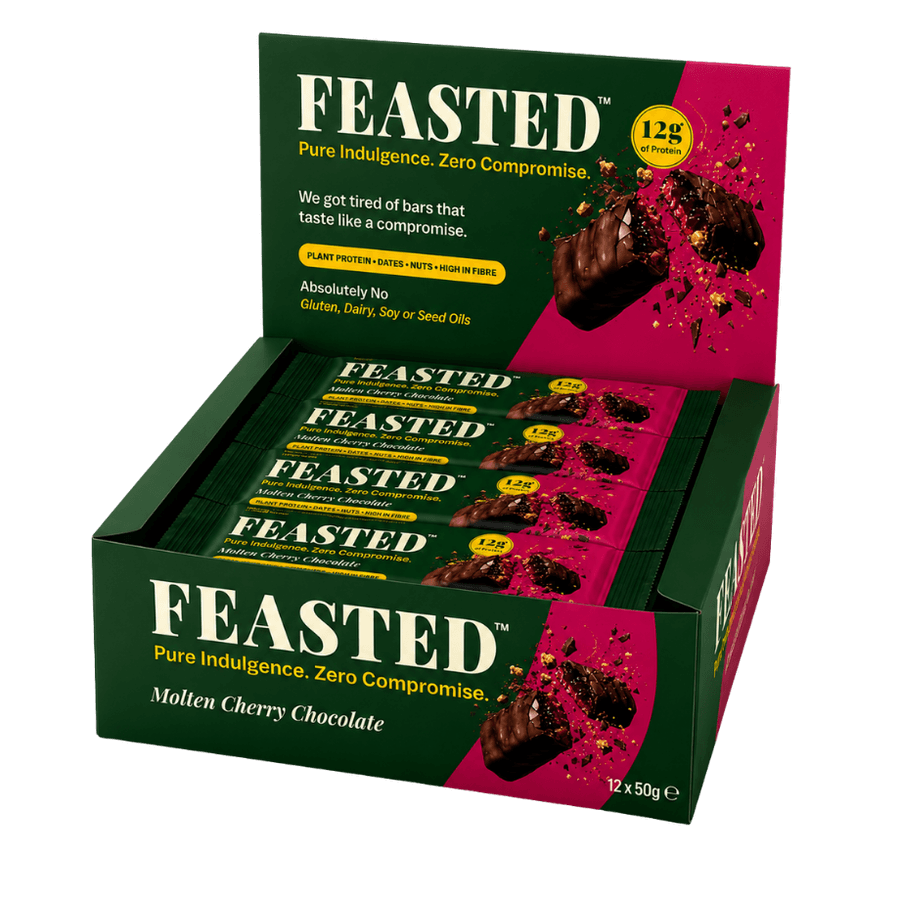
Their Jammy Cherry Chocolate is a plant-based snack bar wearing a real chocolate coat: a fudgy centre of dates, nuts and flaxseed with a dark cherry ribbon set just under the chocolate, at 12g of plant protein and 9g of fibre per 50g bar. Feasted are a small UK family business founded by a research scientist, Harshita Kudaravalli, and the whole pitch is an ingredient list you can read without squinting. A Cookie Dough version runs on the same base.
Dates carry the sweetness here and monk fruit closes it, sitting right at the end of the ingredients list in the same finishing role it plays for Good Ranger. Two things stand out on the label. There are no sugar alcohols at all, no maltitol, erythritol or xylitol, which is the same call we made with our own powder. And the monk fruit is declared as "monkfruit juice extract", which is different wording from the infusion or decoction you will see everywhere else on this list. Their ingredient glossary explains it: pressed and dried juice of the whole fruit, not isolated mogrosides. So despite the word extract, this is not the highly purified form that is not permitted for sale here. It is the whole fruit taking a different route into the product.
OMOSS
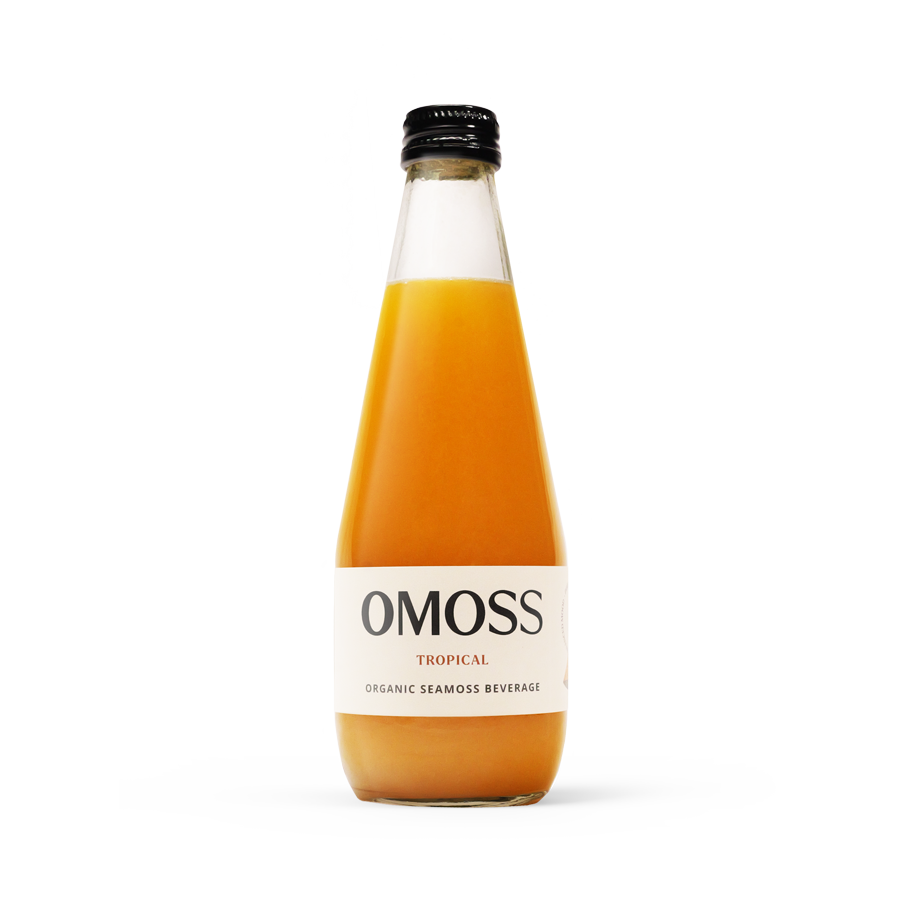
Their Tropical is a still, non-carbonated functional drink built on organic sea moss extract at 50%, with mango puree, lime and a tropical flavour profile. Lion's mane and ginkgo biloba are in there too, which places it firmly in the functional category rather than the soft drinks aisle.
Here the sweetness is a partnership: monk fruit concentrate alongside erythritol. That is a very standard pairing across the industry, because erythritol brings bulk and monk fruit brings intensity. Some people notice a cooling sensation from erythritol, which is why we leave it out of ours, but there is nothing wrong with the combination and erythritol is a fully approved sweetener in the UK and EU.
Mighty
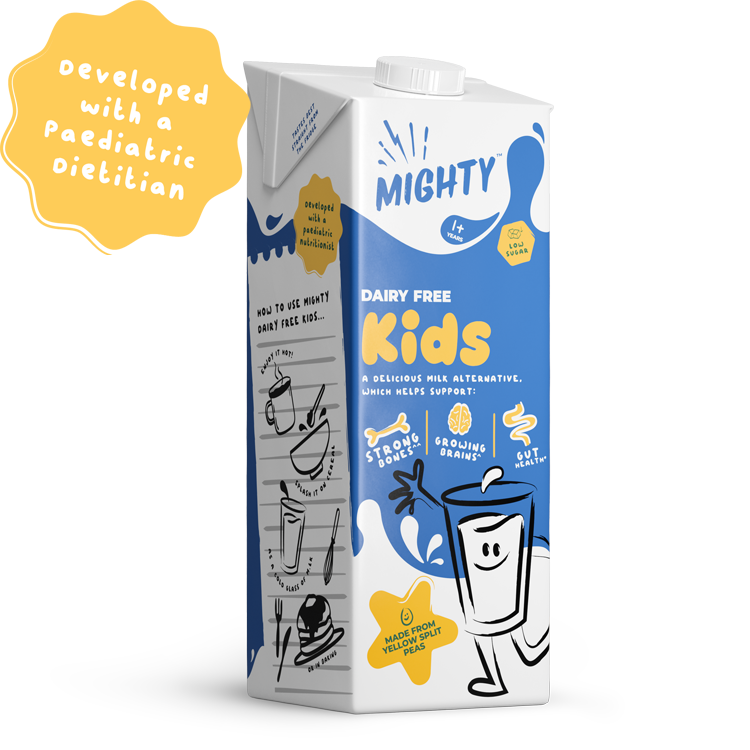
Their Mighty Kids Original is a dairy-free plant-based drink aimed at children, built on pea protein rather than oats or almonds, and fortified with calcium, algal omega-3, iodine and vitamins A, D, E, B2 and B12. The brand describes it as the drink "built for growing legends", which is a better line than most of us manage.
Concentrated monk fruit infusion provides the sweetness, with apple juice concentrate alongside it. Using monk fruit in a children's product is a notable choice, given how carefully that category tends to be formulated, and it is probably the most interesting use on this list.
What we noticed across the labels
A few things stood out once the labels were side by side.
- Nobody uses monk fruit the same way. It ranges from 2% of a granola to a named partner in an electrolyte powder to a finishing note at the end of a bar's ingredients list. The words on the front of the pack tell you very little about the amount inside.
- Pairing is the norm, not the exception. Most of these brands combine monk fruit with something else, usually stevia or erythritol. Using it on its own is still the minority position.
- One brand uses it everywhere. fu:di put monk fruit across cereals, sauces and their own sweetener range, which is what it looks like when a brand stops treating it as a novelty ingredient.
- The good ones quantify it. ELEAT stating "2%" is more useful to a shopper than any amount of front-of-pack language, and we would like to see more of it.
Why we bothered writing this
Monk fruit is still unfamiliar enough in Britain that every brand using it is doing a bit of educating on everyone else's behalf. A parent who meets it first in a Mighty carton, or a runner who meets it in a Hunter & Gather sachet, arrives at the sweetener aisle already knowing the name. That helps all of us.
At Zilch we went the single-purpose route: monk fruit infusion powder with soluble tapioca fibre, 70/30, for sweetening whatever you already make at home. These brands are doing something different, which is building monk fruit into a finished product. Both are worth having, and it is a better category with more people in it.
Related reading
- Is monk fruit legal in the UK and EU?
- What is monk fruit sweetener?
- Monk fruit without erythritol: why we left it out
FAQ
Why do UK labels say infusion or decoction rather than extract?
Because that is the form permitted here. Non-selective aqueous decoctions of monk fruit are not classed as novel foods in the UK or EU, while highly purified mogroside extracts are, and none has been authorised. The wording on the label reflects a regulatory position, not a style choice. The one wrinkle is Feasted's "monkfruit juice extract", which their glossary describes as pressed and dried juice of the whole fruit rather than an isolated mogroside extract, so the word extract on its own does not tell you which box a product sits in.
Are these brands connected to Zilch?
No. Nobody paid for a place on this list and there are no affiliate links. We bought or looked up each product ourselves because we thought they were interesting.
Does pairing monk fruit with stevia or erythritol make a product worse?
Not worse, just different. Erythritol adds bulk and is a fully approved sweetener here, though some people notice a cooling sensation from it and some find it hard on the stomach. We leave it out of our own powder for those reasons, but that is a formulation preference rather than a verdict on anyone else's.
Have we missed a brand?
Almost certainly, and this list is meant to grow. If you make or have found a UK product using monk fruit, tell us and we will add it.
