
Monk fruit vs erythritol: taste, digestion and the heart research
 By Keith Mander, co-founder of Zilch · 09 November 2026

A lot of people only discover monk fruit after erythritol has already let them down: the cold, minty feel in a cup of tea, or a stomach that did not agree with a keto brownie. The two often appear in the same bag, which makes the comparison confusing. They are very different ingredients, though, and each is better at a different job.
How they compare, in short
- Erythritol is a sugar alcohol (E968). It adds bulk like sugar, is a little less sweet than sugar, and can feel cooling.
- Monk fruit is a fruit. As a decoction powder it is a few times sweeter than sugar, with no cooling effect, but it does not add bulk.
- Many "monk fruit" sweeteners are mostly erythritol, so check the first ingredient.
- Erythritol is approved and widely sold in the UK. Recent research on erythritol and heart health is worth knowing about, but it is not settled.
What is erythritol?
Erythritol is a polyol, or sugar alcohol, found naturally in small amounts in some fruits and fermented foods and made commercially by fermentation. It is about 60 to 80% as sweet as sugar. Most of it is absorbed and then passed out unchanged in urine, which is why it provides almost no energy. UK and EU labelling rules count it as 0 kcal per gram.
It is an approved food additive in the UK and EU, listed as E968, and it is easy to find on supermarket shelves.
What is monk fruit?
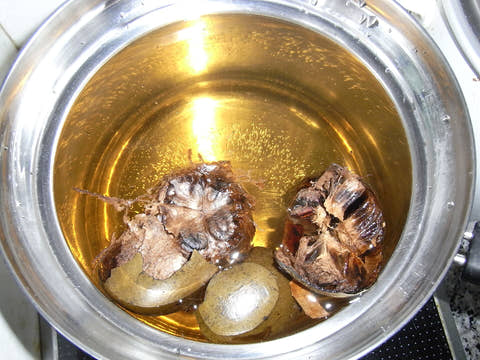
Monk fruit is a small green gourd that grows on vines in subtropical mountains. Its sweetness comes from compounds called mogrosides. In the UK, the form you can buy as food is a decoction: the whole fruit simmered in water and dried to a powder. We explain that in what is monk fruit decoction? Zilch is a monk fruit infusion powder (a gentle water infusion of the whole fruit, known technically as a decoction) with soluble tapioca fibre, around 3x sweeter than sugar.
Taste: the cooling effect
Erythritol absorbs heat as it dissolves, which creates a distinct cooling sensation in the mouth. In a mint chocolate that is pleasant. In a hot coffee or a cup of tea, many people find it odd.
Monk fruit does not do that. Its sweetness is rounder, sometimes with a faint fruity note, and for most people it has a softer finish than erythritol or stevia. Taste is personal, and too much of any sweetener can linger, so start small.
Digestion
Erythritol is gentler than most sugar alcohols. In one trial, people tolerated up to 35g without significant symptoms, with nausea and rumbling at 50g, far less than with xylitol. Even so, any food with more than 10% added polyols has to carry the warning "excessive consumption may produce laxative effects", and some people notice discomfort at lower amounts, especially from erythritol-heavy baking.
Monk fruit decoction powder is used in much smaller amounts and contains no sugar alcohol. Zilch's carrier is soluble tapioca fibre. We cover digestion in more depth in does monk fruit cause bloating?
What does the research say about erythritol and heart health?
This is the part that sent a lot of people looking for alternatives. In 2023, researchers at the Cleveland Clinic published a study in Nature Medicine that measured erythritol in the blood of thousands of people being assessed for heart problems. Those with the highest levels had a higher risk of heart attack, stroke or death over the following three years. Lab work also suggested erythritol made platelets more likely to clot.
A follow-up in 2024 gave healthy volunteers a drink with 30g of erythritol and found it increased platelet reactivity, while a glucose drink did not.
The caveats matter. The 2023 study found an association, not proof of cause. Its participants were already at higher risk, and it measured erythritol in the blood, which the body also makes itself, rather than how much people ate. The 2024 study was small and used a large single dose. In 2023, EFSA set an acceptable daily intake of 0.5g per kg of body weight, based on its laxative effect. Erythritol remains approved. It is fair to say the questions are open, and fair to prefer a sweetener that avoids them.
Monk fruit vs erythritol side by side
| Monk fruit infusion powder (Zilch) | Erythritol | |
|---|---|---|
| What it is | Whole fruit simmered in water, on a soluble tapioca fibre carrier | A sugar alcohol made by fermentation (E968) |
| Sweetness vs sugar | Around 3x | 60 to 80% |
| Calories | Negligible at a typical serving | Counted as 0 kcal per gram |
| Cooling effect | No | Yes |
| Digestion | No sugar alcohol | Well tolerated up to around 35g in trials; laxative warning above 10% polyols |
| Baking | Sweetens; adapt the recipe for bulk | Adds bulk; close to 1:1 |
| Open questions | Long-term data limited, as for most sweeteners | Cardiovascular association under study |
For the monk fruit side, these are Zilch's own figures at a typical serving, the small amount you would stir into a drink:
| Zilch nutrition | Per serving (0.65g) |
|---|---|
| Energy | 8 kJ / 2 kcal |
| Fat | 0g |
| Sugars | 0.2g |
| Fibre | 0.4g |
| Protein | 0g |
| Salt | 0g |
Which is better for what?
- Hot drinks, porridge, yoghurt: monk fruit. You need a little sweetness that dissolves cleanly, and no cooling.
- Baking that needs bulk: erythritol is closer to sugar by the spoonful. With monk fruit, you adapt the recipe, as we explain in baking with monk fruit.
- If sugar alcohols upset your stomach: monk fruit without erythritol.
- Cost per bag: erythritol blends are usually cheaper, partly because erythritol itself is cheap.
Why choose Zilch?
We left erythritol out on purpose. It solves the bulk problem, but it brings the cooling feel, digestive discomfort for some people, and the "is this really monk fruit?" question when it is the first ingredient on the label. Zilch is monk fruit infusion powder with soluble tapioca fibre, and nothing else. That makes it a concentrated everyday sweetener rather than a cup-for-cup baking sugar, which is a trade we are happy to make. More on that in monk fruit without erythritol: why it matters.
Related reading from our blog
FAQ
Is monk fruit better than erythritol?
For drinks and everyday sweetening, most people prefer monk fruit's taste and the absence of cooling. For baking that needs bulk, erythritol is easier to use. Neither is best for every job.
Which is better for keto, monk fruit or erythritol?
Both suit keto at normal amounts. Erythritol counts as 0 kcal per gram, and monk fruit infusion powder adds negligible sugar and calories at a typical serving. Choose on taste and digestion: monk fruit has no cooling and no sugar alcohol, erythritol gives you bulk for baking.
Is erythritol banned in the UK?
No. Erythritol is an approved food additive (E968) and widely sold in the UK.
Why do monk fruit sweeteners contain erythritol?
Monk fruit is concentrated, so brands add erythritol to give it bulk and make it measure like sugar. Check the ingredients: if erythritol comes first, it is the main ingredient.
Photo: a pile of erythritol crystals, by Thomas Kniess via Wikimedia Commons, licensed under CC BY-SA 4.0.

