
Buying monk fruit in bulk for food manufacturing in the UK
 By Keith Mander, co-founder of Zilch · 23 November 2026

If you make food or drink in the UK and want to cut sugar, monk fruit is one of the few natural sweeteners you can use without waiting for an approval that may never come. The catch is that only one form is legal here, and the rules on labelling and claims are stricter than many suppliers let on. This guide covers which monk fruit you can use, how to label it, why reformulating is getting more urgent, and what buying it in bulk looks like.
What to check first
- Only monk fruit decoctions (water preparations of the whole fruit) can be used as a food ingredient in the UK and EU. Purified extracts are not authorised as sweeteners.
- There is no set legal name for it on an ingredients list. Brands use descriptive names like "monk fruit infusion" or "monk fruit decoction".
- Using monk fruit to sweeten a product will very likely rule out a "no added sugars" claim. A "reduced sugar" claim may still be possible.
- HFSS rules and the extended Soft Drinks Industry Levy make cutting sugar more valuable every year.
Which form of monk fruit can you use?
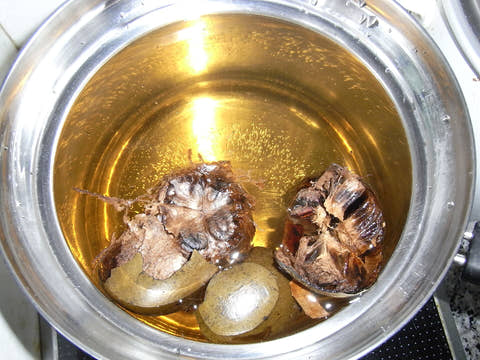
In June 2024 the Food Standards Agency determined that non-selective aqueous decoctions of monk fruit are not a novel food, and the EU reached the same position later in 2024. That makes a decoction a regular food ingredient you can formulate with.
Purified monk fruit extracts, the high-mogroside ingredients common in the US, are a different matter. Used as a sweetener they are regulated as a food additive. They are permitted in the US under the FDA's GRAS system, but they are not authorised in the UK or EU. If a supplier offers you "monk fruit extract" for a UK product, ask exactly what it is. We go into the detail in what is monk fruit decoction? and why can't you buy pure monk fruit extract in the UK?
How do you label it?
UK food law requires each ingredient to be listed by its legal name, or failing that its customary or a descriptive name. There is no legal name for monk fruit decoction, and the FSA's determination notes that its own technical wording is not a labelling designation.
In practice, UK brands use descriptive names such as "monk fruit infusion", "concentrated monk fruit infusion" or "monk fruit decoction". You can see real examples in the UK brands putting monk fruit in their products. If you use a powder with a carrier, it is a compound ingredient. Zilch, for example, is declared as monk fruit infusion powder (soluble tapioca fibre 70%, monk fruit decoction (Siraitia grosvenorii) 30%).
Labelling decisions are yours to sign off, so check your wording with your local trading standards team or Primary Authority.
What sugar claims can you make?
This is where reformulation projects often trip up. The rules on nutrition claims are set out in the annex to the nutrition and health claims regulation:
- "No added sugars" is only allowed if the product contains no added sugars or any other food used for its sweetening properties. Government guidance says this is judged case by case. A fruit-derived ingredient added to sweeten a product is very likely to count, so do not plan your pack around this claim without advice.
- "Reduced sugar" needs at least 30% less sugar than a similar product, and no more energy.
- Front-of-pack colours follow the sugar content: more than 22.5g per 100g is red, 5g or less is green. Cutting sugar can move a product out of red.
Why reformulate now?
Sugar is getting more expensive to keep, in ways that go beyond the price per kilo.
- Promotion and placement rules. In England, less healthy products cannot be placed at checkouts, store entrances or aisle ends, and since October 2025 cannot be sold on volume deals, by businesses with 50 or more employees. Products are judged by a nutrient profiling score in which sugar counts against you. See the government's implementation guidance.
- Advertising rules. Since 5 January 2026, less healthy food and drink cannot be advertised on TV before 9pm or in paid online ads across the UK, with businesses under 250 employees exempt. The regulations are here.
- The sugar levy is widening. From 1 January 2028, the Soft Drinks Industry Levy threshold drops to 4.5g of sugar per 100ml, and milk-based drinks with added sugar lose their exemption.
How does it behave in a formulation?
A decoction powder replaces sugar's sweetness, not its bulk. Zilch is around 3x sweeter than sugar, so you need much less of it by weight, and the lost solids may need to come from elsewhere (fibre, dairy solids, fruit or a bulking ingredient that suits your product). It is easiest where sugar is mainly there for taste: drinks, yoghurts and desserts, sauces, dressings, bars and cereals. Bakes that rely on sugar for structure take more development work, as we explain in baking with monk fruit.
How it compares with other sugar-reduction options
| Ingredient | UK status | Sweetness vs sugar | Adds bulk? | On the label |
|---|---|---|---|---|
| Monk fruit decoction powder | Food ingredient (not novel) | Around 3x (Zilch) | Partly, through the carrier | Descriptive name, e.g. "monk fruit infusion" |
| Steviol glycosides | Approved additive, E960 | Around 250 to 300x | No | "Sweetener: steviol glycosides" |
| Erythritol | Approved additive, E968 | 60 to 80% | Yes | "Sweetener: erythritol"; polyol warning above 10% |
| Purified monk fruit extract | Not authorised (permitted in the US) | Often quoted at 100 to 250x | No | Not usable in UK or EU products |
| Allulose | Not authorised; application in progress | Around 70% | Yes | Not usable yet |
On cost, a simple sweetness-equivalent check helps: at around three times sugar's sweetness, Zilch at £25/kg works out at roughly £8.30 per kilo of sugar it replaces for sweetness, before you account for any bulking ingredient.
Every process is different, so trial it in yours before committing. That is what our development samples are for.
Buying in bulk from Zilch
We supply Zilch monk fruit infusion powder to food and drink brands in 20kg fibre drums. At the time of writing:
- Price: £500 per 20kg drum (£25/kg), zero-rated for VAT
- Minimum order: one drum
- Lead time: around one month, with next-day dispatch planned from early 2027
- Shelf life: 36 months, stored ambient and dry
- Documents: specification sheet, safety data sheet and a certificate of analysis for each batch
- Standards: our supplier is certified to BRC, FSSC 22000 and ISO 22000, among others
- Samples: a 200g development sample to test in your own recipe
Full specifications and the sample request form are on our monk fruit powder for food brands page.
Why choose Zilch?
We are an Edinburgh-based UK brand selling the form of monk fruit that is actually legal to use here, with no erythritol, sugar alcohols or artificial additives in the powder. You get a UK supplier who can answer questions about the product and its paperwork, in drum sizes that suit a growing brand rather than a multinational. If you are reformulating, send us a note about your product and we will send a sample.
Related reading from our blog
FAQ
Can I use monk fruit in food products sold in the UK?
Yes, as a decoction. It is a regular food ingredient in the UK and EU. Purified monk fruit extracts are not authorised as sweeteners.
Can I claim "no added sugar" if I sweeten with monk fruit?
Probably not. The claim excludes any food added for its sweetening properties, and that is judged case by case. Take advice before using it.
What is the minimum order for bulk monk fruit powder?
From Zilch, one 20kg drum. We also send 200g development samples.
