
What's in a monk fruit powder? Tapioca fibre and other carriers explained
 By Keith Mander, co-founder of Zilch · 12 November 2026

Turn over almost any monk fruit powder sold in the UK and the ingredients list has at least two items on it. That is not a trick. The form of monk fruit that can legally be sold as food here, a decoction, is concentrated and sticky on its own, so it needs a carrier to become a powder you can scoop, measure and keep. What matters is which carrier, and how much of it.
In plain terms
- In the UK, monk fruit is sold as food in decoction form. Purified monk fruit extracts are not authorised as a sweetener.
- A dried decoction clumps and draws in moisture, so it is combined with a carrier that helps it flow, measure and keep.
- The common carriers (soluble tapioca fibre, erythritol, maltodextrin, dextrose and inulin) behave very differently in taste, digestion and blood sugar.
- Zilch is 70% soluble tapioca fibre and 30% monk fruit decoction. The ingredients list on any pack tells you what it is mostly made of.
Why can't you just buy plain monk fruit powder?
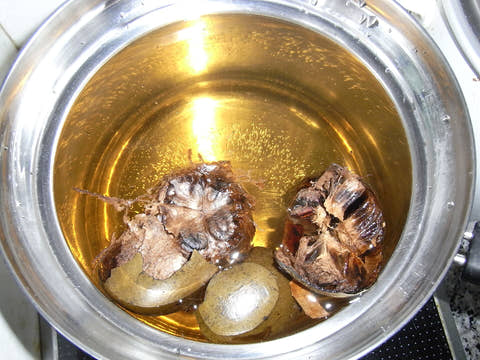
Partly because of the law. In June 2024 the Food Standards Agency determined that non-selective aqueous decoctions of monk fruit are not a novel food, so they can be sold as ordinary food. A decoction is the whole dried fruit simmered in water, strained and concentrated, the traditional preparation that shoppers usually know as a monk fruit infusion.
Purified extracts are a different matter. They concentrate the sweet compounds, the mogrosides, and are regulated as a sweetener additive. When the European Food Safety Authority assessed one in 2019, it could not confirm its safety on the data provided, and purified monk fruit extract is not authorised as a sweetener in the UK either. Our post on whether monk fruit is legal in the UK and EU has the full story.
The other reason is practical. Dried down on its own, a decoction carries the fruit's natural sugars along with its mogrosides. That makes it sticky, and it tends to pull moisture from the air, so on its own it clumps rather than pours. It is also concentrated enough that small amounts are hard to dose evenly. A carrier spreads it out into a free-flowing powder. We cover the process in more detail in what is monk fruit decoction?
The common carriers, compared
| Carrier | What it is | Why it is used | Taste and digestion | How it is labelled |
|---|---|---|---|---|
| Soluble tapioca fibre | A soluble fibre made from tapioca (cassava) starch | Neutral, free-flowing and quick to dissolve; adds fibre | Neutral taste, no cooling. Like most fibres it is fermented in the gut, so very large amounts can cause wind in some people | "Soluble tapioca fibre" or "tapioca fibre" |
| Erythritol | A sugar alcohol (polyol), approved as additive E968 | Adds bulk and sugar-like crystals, so a product can measure spoon for spoon like sugar | A cooling feel in the mouth. Little effect on blood glucose, but larger amounts can cause bloating or a laxative effect | "Erythritol" or "sweetener: E968" |
| Maltodextrin | A carbohydrate made by breaking down starch, often from maize, potato or wheat | Cheap, neutral bulk that helps a powder flow | Bland or faintly sweet. Digested quickly into glucose, with a high glycaemic index | "Maltodextrin". Counts towards carbohydrate, but mostly not towards "of which sugars" |
| Dextrose | Glucose, usually made from starch | Bulk, flow and a little sweetness | Mildly sweet. It is a sugar, so it raises blood glucose | "Dextrose" or "glucose". Counts as sugars |
| Inulin | A soluble fibre, usually from chicory root | Bulk, fibre and a faint sweetness | Highly fermentable, so it can cause wind and bloating, especially in people sensitive to FODMAPs | "Inulin" or "chicory root fibre" |
None of these is dangerous at normal amounts, and erythritol in particular is widely sold and approved. The point is that two packs both called "monk fruit sweetener" can behave very differently once the carrier makes up most of the jar.
What Zilch uses, and why
Zilch is 70% soluble tapioca fibre and 30% monk fruit decoction. We chose tapioca fibre because it does the carrier's job and very little else: it has no flavour of its own to speak of, no cooling effect, and it dissolves easily in hot drinks. That lets the monk fruit lead. It also means Zilch is high in fibre as a powder (a typical serving gives you 0.4g), and free from erythritol, sugar alcohols, maltodextrin, dextrose and artificial additives.
Here is what Zilch is not. With 30% decoction, it is around 3x as sweet as sugar, so it does not measure spoon for spoon. We could have diluted it further to make a cup-for-cup product, but then you would need three times as much powder, almost all of it carrier, for the same sweetness, and the easy way to bulk a product that far is erythritol, the ingredient we set out to avoid. Our monk fruit conversion chart shows how to work with the concentration instead.
Because the decoction comes from the whole fruit, the label also shows small amounts of naturally occurring sugars per 100g. At the amounts you actually use, the calorie and glycaemic impact is negligible, and there is no added sugar.
How to read a monk fruit label in the UK
- Read the ingredients in order. UK rules require ingredients to be listed by weight, from most to least. Whatever comes first is most of the pack.
- Look for a percentage. The same guidance says an ingredient named in the product's name, or emphasised in words or pictures, should usually have its percentage declared. That is how you see how much monk fruit you are paying for.
- Check how the monk fruit is described. "Monk fruit decoction", "monk fruit infusion" or "luo han guo" all point to a fruit preparation. If a pack sold here lists "mogrosides" or a purified monk fruit extract as a sweetener, it is worth asking questions.
- Spot the polyol warning. Foods with more than 10% added polyols must say "excessive consumption may produce laxative effects". On a monk fruit product, that usually means erythritol.
- Read the nutrition panel per 100g. A high fibre figure points to a fibre carrier, high carbohydrate with low sugars suggests maltodextrin, and a high sugars figure suggests dextrose. Remember that you use far less than 100g.
If you are reading labels with blood sugar in mind, our guide to hidden ingredients in monk fruit products goes into more depth.
Why choose Zilch if you read labels?
Because ours is short enough to read in one breath: soluble tapioca fibre and monk fruit decoction, with the percentages on the pack. We would rather show you exactly what the carrier is and why it is there than make the monk fruit sound bigger than it is. It is a concentrated everyday sweetener for coffee, tea, porridge and yoghurt, and the label says so.
Related reading from our blog

FAQ
Is soluble tapioca fibre the same as tapioca starch?
No. Both come from cassava, but tapioca starch is an ordinary digestible carbohydrate. Soluble tapioca fibre is processed from the starch into a form that is largely not digested in the small intestine, which is why it counts as fibre on the label.
Why does a carrier make up most of the pack?
Because the decoction is concentrated and sticky on its own. The carrier turns it into a powder that flows, dissolves and can be measured at home.
Is erythritol allowed in the UK?
Yes. It is an approved sweetener (E968) and widely sold. Zilch simply does not contain it, or any other sugar alcohol.
Photo: dried monk fruit, by Fumikas Sagisavas via Wikimedia Commons, licensed under CC0.

